
Truly sickening approach.

The blurby bit
Hello Abolitionist Friends!
We are looking forward to seeing you this evening online and are delighted with the response to this launch. We’ll be following a fairly standard event format agenda. If you can take a look at the resource itself even in brief it will help you to get more out of the event – but it’s not required obviously – welcome as you are!Speakers: Leah Cowan, Lola Olufemi, and Billy (a frontline gender-based violence worker)
From the launch email
Introduction
I listened into this webinar just out of interest, the ‘abolition movement’ isn’t strictly my niche, however I was disturbed enough by what they had to say to feel it worth posting about. If you didn’t know, abolitionists want to destroy all policing services and remove punishments for criminals, though for some time they have been scratching their heads how to square this aim with their adjacent cosily-named ‘gender-based violence’ schtick. As we all know, the crimes of rape, sexual abuse and domestic violence, are overwhelmingly committed by men, with women largely the victims. To solve some of the problems around this issue, the UK prison abolitionist squad has developed a booklet to shove at people when anyone might question them about why they felt someone like Wayne Couzens should escape the criminal justice system.
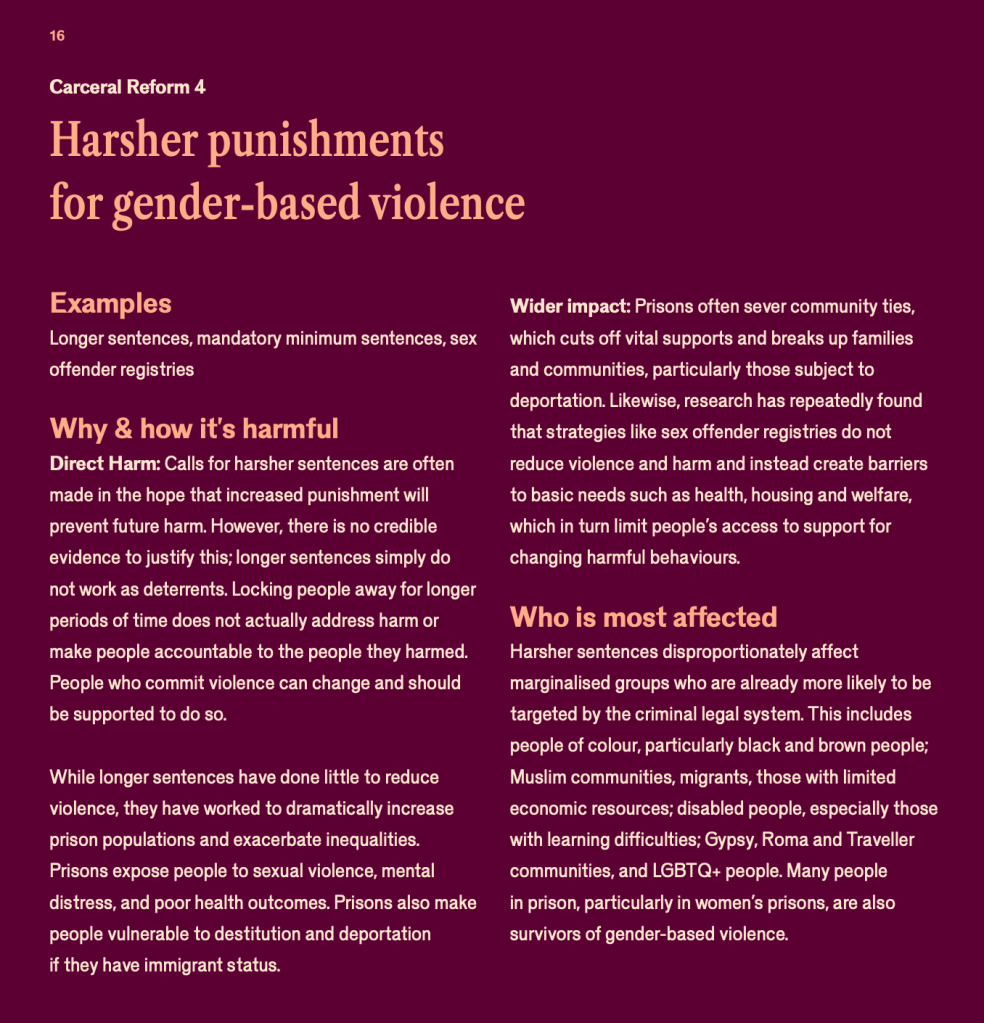
I think it’s fair to say that they have failed on every level, e.g. real life case studies nowhere to be seen in print and very far from the minds of the panel. They had the gall to invoke Sarah Everard’s memory, not sure why since their way of doing things would see Wayne Couzens a free man. The central problem with psychopathic sexually deviant criminals is that they cannot be reformed (a fact which is so well established few would even bother questioning it), the reason for life long sentences to protect the public. Not so the abolitionist lot. They want shorter sentences, especially for those who fulfil the above detailed criteria in ‘Who is most affected’.
Dystopian
Instead, what they have created is a chillingly dystopian future for women and girls dealing with serious sexual assault and rape, as effectively one of the aims is to stop women accessing the criminal justice system at the point of access; reporting crime to the police. On the other hand they are very much at the forefront of shrieking about the phenomenon of ‘upskirting’. In case you might think: ‘Don’t worry, they’re all idiots, no one is going to listen to them,’ at least one of the speakers was a professional (though I do use that term loosely) working with victims of sexual violence, no doubt with influence on how funding might be allocated in her organisation. You won’t be surprised to learn that it was Billy, a trans-identified female with they/them pronouns and spaghetti for brains, who repeatedly asserted that survivors cared about the wellbeing of the men who had abused them and didn’t want them punished. Prize nitwit Lola Olufemi chaired.
The following sentiments were voiced:
- Because certain migrant/ethnic communities face prejudice from the police, their lack of confidence in reporting crimes to the police shouldn’t be challenged, rather affirmed.
- Rape crisis services are ‘carceral’ in nature and this should be challenged.
- It had been heard from victims of sexual crime that the criminal justice system took too much from perpetrators and that they didn’t want the perpetrator to be punished.
- The violence of the border police was a factor in migrants going onto commit crime.
- Dissatisfaction that the government cared about sexual violence.
- Sexual violence will only end once there is a full communist revolution.
- Divest money from the criminal justice system.
- Survivors were told there were only two options; to report or not report, this was not true (inference being that there are multiple ‘creative’ options, which are likely to give a rape victim warm feelz).
- Encourage survivors of sexual violence to have the lowest possible hope of achieving justice. Ask them: ‘Why do you want to report?’ and remind them that the process is brutal. This was framed as helping them to make an ‘informed choice’.
- Survivors also care about the wellbeing of the perpetrator(s).
- ‘Minoritised communities’ (meaning non-white and/or from the lowest economic class) find their own creative solutions to resolving gender-based violence, with example given of Romany women having to seek refuge in friends/family houses until violent husbands calm down. This was promoted as a good solution to be replicated across other communities. (This is also known as racism/classism.)
Chronic
Although one can quite agree that victims should be advised about the reality of the current state of the legal process, and that rates of conviction are virtually non-existent, one would expect professionals in the field talk about this in terms of support, rather than merely managing such people as if they were idiots. You would also expect feminists to focus on improving the chances of such crimes being fully prosecuted. Instead, the feminist prison abolitionists very much want to dissuade service users from bothering at all. Particularly worrying though, was the undue focus on the perpetrator being harmed by any punitive measures meted out to them, a curious claim, when it had already been established that very few men actually are punished.
If even one woman has been discouraged from reporting a crime or seeking due legal process of the backs of these people, it’s a travesty. That such people have access to vulnerable women and are actively promoting a ‘prison abolition’ agenda and influencing funding streams is about as amoral as it gets. The women promoting this, of course, are all comfortably off and don’t have to worry about the recently released rapist roaming the council estate they live on.
Have a look at the resource pack and/or the handy resource charts to see if you can make any head or tail of it. I won’t do an analysis but clearly taking any money away from the criminal justice system means less justice for everybody.
Thank you for reading! Sign up to my blog by going to the bottom of the page.
Please share on other forums if you liked it, as I only do Twitter.
 The Lies They Tell
You must be logged in to post a comment.