
A cult gathering.
The blurby bit
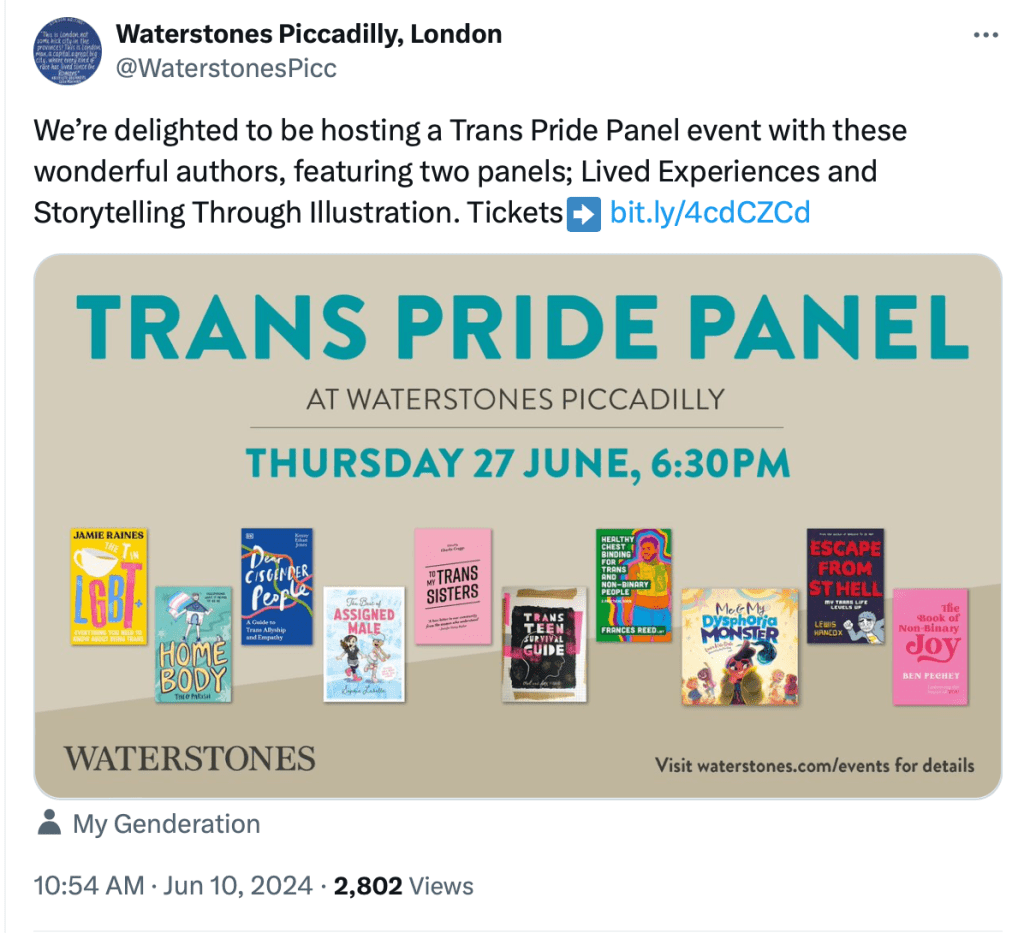
We are delighted to be hosting a Trans Pride event with MyGeneration, the Trans Pride Publishing Network and Jessica Kingsley P; join us for an evening celebrating the amazing voices of Trans authors and illustrators, featuring two panels; Lived Experiences and Storytelling Through Illustration.
Lived Experiences panel
Jamie Raines – The T in LGBT
Kenny Ethan Jones – Dear Cisgender People
Charlie Craggs – To My Trans Sisters
Laura Kate Dale – Me & My Dysphoria Monster
Ben Pechey – The Book of Non-Binary JoyStorytelling Through Illustration
From the Eventbrite listing
Theo Parish – Homebody
Sophie Labelle – Assigned Male at Birth comics
Fox Fisher – Trans Teen Survival Guide
Ocean Grove – illustrator
Lewis Hancox – Escape from St Hell
Introduction
Waterstones, no doubt so they could tick off a few boxes on the Stonewall Equality Index, held this panel for Pride month. Really, it was an opportunity really for teens thinking about transition, or who had started to transition, to be near real live adults who had. There was also the chance to socialise after and mingle with their social media heroes. Fox Fisher and Lewis Hancox, the two trans-identified females who make up the influential My Genderation, appeared to have organised the event and gave the introductions. Charlie Craggs wasn’t able to make it because he was too coked off his face to get out of bed*.
* Joke, I have no idea why Craggs couldn’t make it.
Panel 1 – Lived Experiences
If you’ve not been on TikTok or Instagram you’ll have no idea who Ben Pechey is. Well, I’ll tell you, he’s yet another DEI consultant and TEDx speaker, who identifies as non-binary. I think he may be transitioning. Into a Parker Knoll armchair. No, seriously.
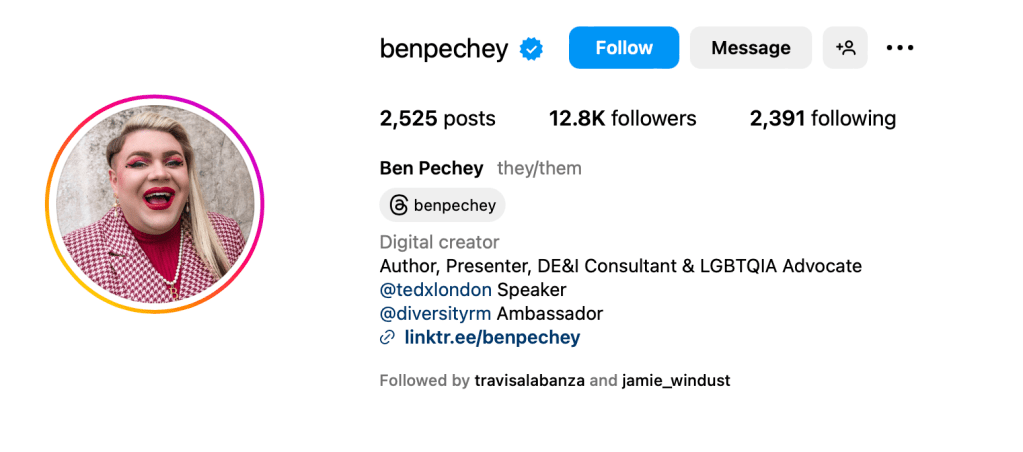

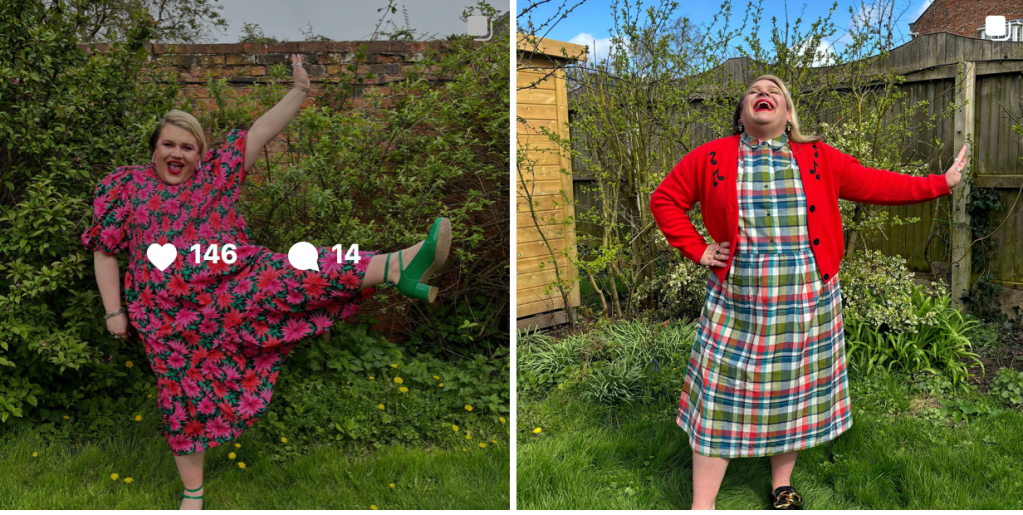
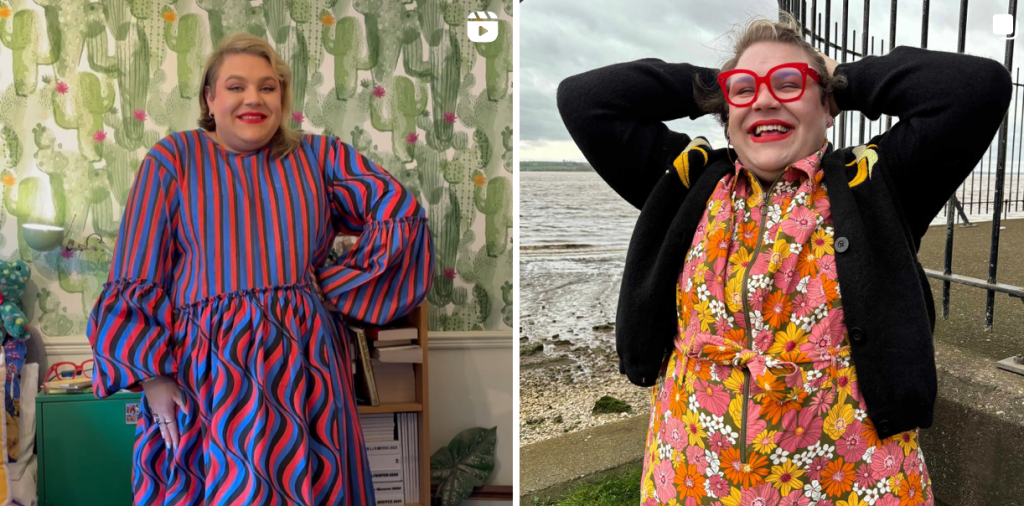
He’s what would have been known as a campy queen in old money, in today’s he’s just a badly dressed enby with some real ersatz sassiness. Nevertheless, ‘they’ were very pleased ‘themselves’, and the assembled trans-identifying teen girls, who desperately laughed at every fake line, were too.
Laura Kate Dale told us (the first of about a million times) that he had written several lived experience books already but the one he was talking about today was Me & My Dysphoria Monster. Jamie Raines described herself as a YouTube content creator, her book was part self-help/part memoir. Kenny Ethan Jones wanted the assembled TIF teens to know that she had made history being the first trans man to front a period campaign in 2018. Her book – ‘part memoir, part manifesto’ – had come out a few weeks earlier, and was a ‘love letter’ to ‘cisgender people’ on how to stand up for trans people (AKA clues for teens on how to bully parents).
Pechey asks the ‘lived experiences’ panel what their books are about
Well, Laura Kate Dale had written books on a lot of topics, including ‘video game butt reviews’ (he doesn’t lie, he has an actual book which focuses on the animated butts of video game characters, right down to ‘the depth of a crack, the jiggle of a cheek’). However, Me & My Dysphoria Monster, was the children’s book he needed growing up – wanting to prove that dysphoria was something that could be ‘managed and thrived alongside’. Until you ended up writing Things I’ve Learned From Mario’s Butt, of course.
On speaking about her book, The T in LGBT (see here for my blog on the same) Jamie Raines also claimed she wrote the book she had needed growing up.
‘My book was to stop cis people asking me questions,’ said our Kenny, drawing knowing laughter from the teens, her love letter to cis people already a distant memory. Kenny Ethan Jones had collated all the questions put to her on Instagram and now could just tell ‘cis’ people to ‘buy it’. Veering suddenly, she talked of traumatic experiences that she needed to learn to process. Her book also talked about having sex and being black and trans because there weren’t many black trans men in the media. It was hard to be trans and it was hard to be black and what happened when those discriminations overlapped? (You get a book deal in Kenny’s case.)
Pechey noted that all had written books to fill the gap in the market (a gap which is now overstuffed, since all trans memoirists everywhere say exactly the same) but what was the journey from page to print like?
Kenny Ethan Jones revealed that her book had been inspired by her mum, her greatest ally, who had helped her ‘be the man I am today’ but had sadly passed away when she was just 21 years old. She said that she had ‘come out’ as trans nineteen years ago, yet nowadays the way trans people were spoken about was ‘disgusting’. If you want a sample of how ‘disgusting’ the MSM is towards trans people, here is an article, no doubt Ethan Jones was paid for, all about her egg donation to sister Kizzy. In the associated video, she tells us that she didn’t come off testosterone prior to the procedure, but merely reduced her pumps from 3 to 1 times a day.
‘I said “you can have my eggs if you want.”
‘She said “are you serious?”
‘I wasn’t even sure if it was a possibility — trans healthcare is so understudied.
‘So we both went and did our own research, and we did find some trans men who’d had their eggs harvested.’
Within weeks, Mr Jones contacted the NHS to find out if it was possible for him to have the egg retrieval procedure.
Emotional moment trans man undergoes egg harvesting op for sister so she can have a baby: ‘It was the easiest decision of my life,’ he says, Mail Online, 30 May 2024
The article says that Ethan Jones is just 30 years old and claims she started transitioning in 2011, i.e. when she was 13. This means she is claiming she came out as trans in 2005, aged around 11. I find both claims doubtful.
Anyway, back in the good old days, everyone just accepted that she was a boy. There were no confrontations, people just let you get on with it. This made her worry a lot for ‘trans children’ nowadays. Coming out now was much more difficult, even though language had changed and there were many more resources. At her recent book signings, it had warmed her heart to see a lot of trans men with their mums (someone in the audience, gave out a mumsy ‘ahh’). Our Kenny had a moment while she fought back the tears. So manly.
All of the books that Laura Kate Dale had written on trans stuff had been in response to having an experience and not being able to find a resource which would inform him about that experience. He’d written a book about being autistic and trans, another about anti-trans hate and the community response. The children’s book was inspired by his experiences growing up, which he didn’t expand upon, as you’d expect. What he was keen to explain, however, was that there was an attempt to ‘ban telling people about trans people’ and this was where the inspiration for the Monster book had come from. He warned the audience that the government (Conservative at that time, it was held just two weeks before the 2024 general election) was going to bring in a ‘Section 28 just for trans people’. Dale claimed that even the left wing parties were planning to do this. There were book bans going on in the US. His book was to help fight back again stopping the discussion about trans children and revealed that he hadn’t come out earlier because there were no reference points for him as a kid. (Will be interesting how long this argument can last into the future.) ‘The first time I saw a depiction of a trans person in media, I came out that night,’ Dale said. A woman (probably the one who’d gone ‘ahh’ earlier) gasped ‘Oh my god,’ as Dale related his blatant lie. Others murmured in wonder. Cue a round of applause.
Jamie Raines, who vlogs more or less exclusively on the trans issue, pretended that she had never wanted to write about being trans until the offer to write such a book was made. The publisher had wanted it to be a memoir but when she wrote a chapter about her ‘lower surgery’ experience, it quickly became focussed on being a guide and talking generally about the trans experience. She wanted readers ‘to get hope’ from it.
Pechey has also written a book. The Book of Non-Binary Joy. It was certainly an uphill struggle getting people to believe that trans non-binary people exist. Pechey claimed that books about non-binary people were ‘prescriptive’ or ‘telling you how to be’ (I’m sure fellow NBs, Jeffrey Marsh, Jamie Windust and Travis Alabanza would disagree with this characterisation of their masterworks).
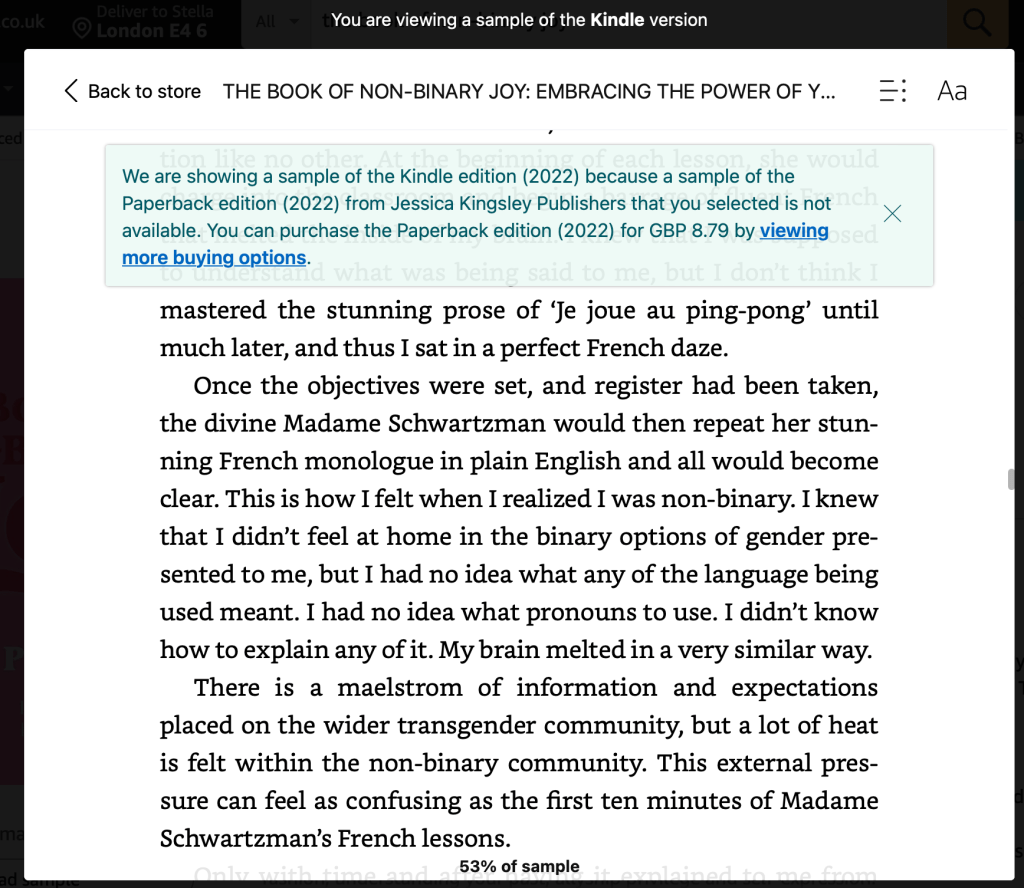
On the writing process
Ben Pechey said that writing a book was ‘horrible’ and I think we can all agree, based on the excerpt above, how terrible it must have been for him. Pechey wanted to know of the panel, did they also find it so?
Jamie Raines found that she had gotten very grumpy whilst writing hers, which made her wife ‘not very happy’. The teen audience giggled. Two second later Raines was contradicting herself, saying she had found it easy to write the personal stuff. Another two seconds later: Revisiting some of the conflicts had been tough and she had felt a lot responsibility to get things right.
Kenny Ethan Jones had micro-managed her publisher, so had had a good experience. She spreadsheeted their every move, ensuring that they were contacting all the right people. Agreeing with Jamie that the personal stuff was difficult to write about, she also said she enjoyed recalling fun stories about mum. Like the times when mum used to look after a group of boys in the house and operated a ‘open door toilet policy’. This meant Kenny could see the boys pee and made her wonder why she couldn’t do the same. She mysteriously ended up ‘falling into the toilet bowl’. Other recollections were more difficult though, like her sister (this is the one who got her eggs) telling her she didn’t want her to have ‘bottom surgery’, as she was concerned about the complications she had seen reported online. Kenny shut her up by telling her ‘When I want to get a penis, I’ll get a penis, so get over it’. Again, this drew titters from the teen girls. She also worried that talking about her experiences of being a ‘bisexual man’ and being penetrated by men would degrade her masculinity in the eyes of others (if they’re doing it in your vagina Kenny, then the answer is yes).
In terms of the books that Laura Kate Dale had written about being transgender, the Monster children’s book wasn’t autobiographical (so not his ‘lived experience’ then, as he’d had already claimed twice in the last 15 minutes) and bought a different set of challenges to him. The book had the least words of any of the books he’d already written, however this meant that he had really had to chose his words carefully and get the right nuance. He knew that it would receive more scrutiny than any of the other books he’d written on being trans because it was going to be read by children. He couldn’t relax until a good number of trans people had read it and approved of it.
Dealing with transphobia
Behaving as if a veteran of the circuit, Ben Pechey-Come-Lately reflected that one reviewer had focussed in on how British he had come across in his writings, i.e. talking as if he were upper class (which he clearly isn’t). His utterly trite comments on the matter drew hysterical laughter. Pechey told he had had a difficult week because one of his videos had done very well but white men were ‘very very angry’ about it all, which provided a link to his next question: How do you deal with backlash from being trans?
Well, when Laura Kate Dale was first writing books about being trans, he didn’t have that many trans people in his life and he’d been doxxed, which wasn’t very nice. Dale, a long time computer industry nerd, said that he often just stepped away from the internet and didn’t look at the criticism. In fact, he even gave over his passwords of his social media accounts to a friend, who would change the passwords for him, so that he couldn’t get back in, until he was ready to go back online. Right.
Jamie Raines recommended that people stay away from Twitter and that staying away had fixed a lot of things for her. Ben Pechey made a lame joke about deadnaming Twitter (a joke, which has already been DOA for at least the last year), Laura Kate Dale joined in and the audience cheered. Raines is able to look through comments on the videos she posts but only for the first half hour (when the fans are most likely to engage, I guess) but after that she isn’t able to cope. Her wife, Shabba, is also very proactive at managing her online activity and will tell her if she thinks she needs to come off it.
For Kenny Ethan Jones, not looking at the internet was life saving and she has blackout periods where she doesn’t look at anything. If there was anything so important, she’d find out about it from her peers eventually but for the period when she is off-line, they are forbidden to inform her. Specifically, she ‘didn’t want to know what JK Rowling had said’. The other thing to do was to create a safe space, for example, binge watching Drag Race or going out driving. There was a third strategy but she couldn’t remember it.
In other words, all of the ‘authors’ were recommending their audience actively avoid any kind of critical feedback on the internet, despite the fact that social media was their bread and butter.
Trans Youth
Final question from Pechey to the panel: Trans youth needs us more than ever before, what do you think the world needs more of in terms of books?
Guess what? Laura Kate Dale was sat on a lot of books about being trans that he had not written yet (as well as the ones he had already written). He was planning to write a children’s book about autistic sensory overload – explaining the internal and external signs of the phenomenon, working with the same illustrator as the Monster book.
Jamie Raines had forgotten the question asked only a few moments earlier, so Pechey repeated for her. Turns out Raines thought there needed to be more ‘passive representation’ of trans people in literature, i.e. incidental characters, who just happened to be trans, so that people wouldn’t avoid what they ‘hated’. Pechey intervened to say that trans people weren’t special because they were trans, they were special because they were gorgeous and stunning, thank you very much! Raines thought it super important we get to know people before we judge them for their identity (unless they’re terf-identified obvs).
Kenny Ethan Jones is working on book two, which would be based on her early childhood; when she was younger she used to pretend that she had and was a twin brother. The pretence was inspired by her mum being a twin. She had gone to an all girls school and her friends eagerly indulged the fantasy, reporting to each other that they had sucked the twin brother off. After this weird confession, Ethan Jones quickly reverted to evangelising; she wanted to move away from the trans space, she wanted to speak to people outside on broader topics. She was also thinking about doing books on masculinity and grief, where she planned to only reveal halfway through that she was trans, as hopefully by that point the reader would have fallen in love with her.
What would you like to see from your next publishing journey?
Asked by audience member, working in publishing on the agency side.
Ben Pechey said that publishers and agents were a bit predatory on ‘trans journeys’. It very much sounded like Pechey’s agent had lost all interest in Pechey and no longer answering emails.
Laura Kate Dale would like more support when one of his books was getting ‘negative attention from the wrong people’, namely, resources to help deal with the incoming situation and ensure his safety.
Jamie Raines had to explain three times why she wanted a cup of tea on the book cover and what was meant by ‘spilling the T’. Pechey expressed disbelief but Raines assured that she had to send three paragraphs (probably it was just an outline for the book, as is standard, these people will twist anything). She added that at times there was no understanding from the publishers on what she was talking about and it would have been great if they had all done a training course first.
Publishers should spend more time promoting trans authors to audiences not yet exposed or interested in gender ideology, said Kenny Ethan Jones hopefully.
What message can we take back to trans and non-binary youth from you?
Asked by female teacher, who had been at the TUC LGBT+ conference that day, with two colleagues. (Probably the woman who was oo-ing and ahh-ing all the way through.)
As scary as things were right now, the future was tickety-boo, reassured Laura Kate Dale. Demographic data showed that young people were much more inclusive of trans people and it was a trend that continued upwards. The violent shrieks we were hearing, were simply the death knells of a small minority of hateful people. (If that is the case though, why bother worrying what terfs say?)
Panel 2 – Storytelling Through Illustration
Now this panel featured the notorious Sophie Labelle, a trans-identified male, better known as @AssignedMale as per his Twitter handle. In 2022, Labelle was exposed by Reduxx as a nappy fetishist and an auto paedophile fantasist.
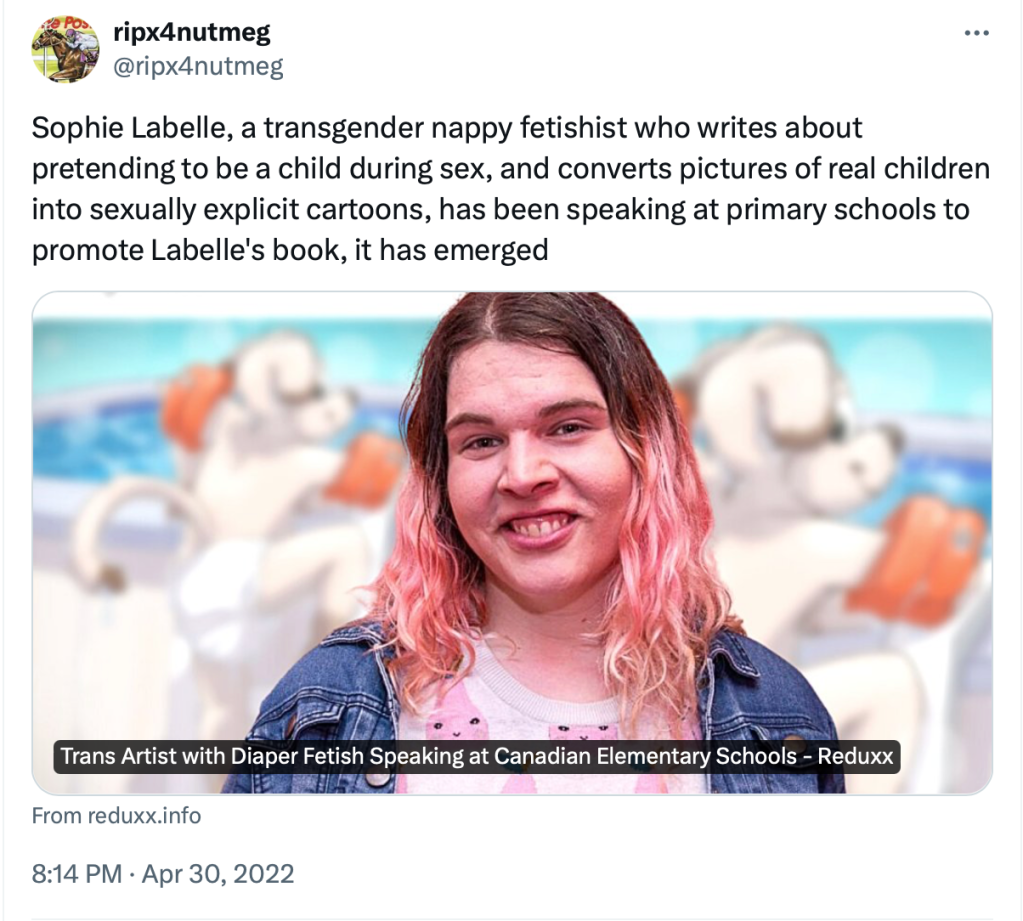
Other panel members were Fox Fisher (four published books, a trans-themed colouring book and a self-published comic book), Lewis Hancox (two graphic memoirs), and two other trans-identified females who were new to me – Theo Parish and Ocean Grove. Theo Parish identifies as non-binary and the author of Home Body (Discovering what it means to be me). The sample available on Amazon shows the story telling is dull and basic and illustrated in the style favoured by all queer theorists, flat and horribly. Macmillan Children’s Books, however, felt very differently, ‘triumph[ing] in a six-way auction’ to get the rights and give Parish a two-book deal.
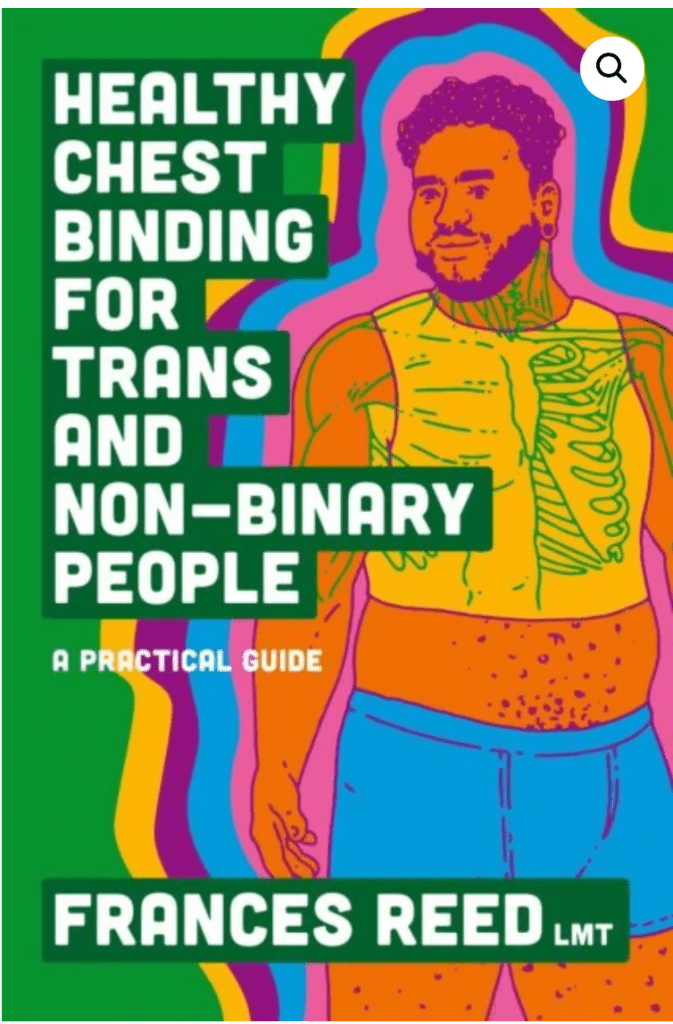
Ocean Grove had illustrated a book on ‘healthy binding’ (see images below).

What is your creative process?
Theo Parish has ADHD so her creative process is very chaotic … but works to a schedule, and since you never know when a good idea might pop up she carries a sketch book around with her everywhere. (Doesn’t sound chaotic at all.)
Sophie Labelle pretended to have a panic attack (again cooing noises emanated from the stupid ally teachers) when it was all too obvious he was more than content being the centre of attention. It was his partner’s birthday the same day (more cooing, this time more generally), yet here he was on tour and wouldn’t see him for three weeks! Someone asked him if he needed a friend and yes, he would love that! Labelle liked to work outside, without the distraction of his cats and typically creates 20 to 30 strips at a time.
For Lewis Hancox, she works on the art first, before writing the script, as she finds it easier to visualise things.
Ocean Grove has lots of notes on her phone, which when she reads back has no idea what she was referencing. Sometimes she works on stuff after she has come home late, in bed. Unlike Labelle, Grove has to be in the house when she works, as she often draws nude bodies (tee-hee).
Like Parish, Fox Fisher also has ADHD and finds she has to write things down, unlike all us normies who simply remember every single idea, just like that. Just call it our cis superpower.
What piss poor answers, eh? Remember, they all knew they were being interviewed on this exact topic, so could have easily have thought up something funny and interesting to share (well, maybe not, but you know what I mean).
What about the dopamine hit of producing something on social media versus publishing, which takes a much longer time and has much less immediacy?
Now it was Ocean Grove’s turn to reveal that she had ADHD. She gave an answer so unremarkable and so dull it doesn’t bear repeating. Hancox had a little bit more insight, in that she recognised that getting likes on SM was quite addictive, whereas the books had taken a lot of work but were received in a much different way. In other words, she was mirroring the point already made by the question, which means it was a shit question.
Labelle revealed that he also writes novels, which contain the same characters as the comics. He started doing the comics to entertain his trans friends at school (he is 36, so this seems impossible, even for Tranada). To much laughter, Labelle joked that he didn’t have any cis friends but he wasn’t a cis phobe – his parents were cis, you know! (No, your parents are fucking disappointed, mate.)
Who is your audience? Do you write specifically for the trans community or for the wider community?
Yawn. Theo Parish wrote her graphic novel for her teenage self. It was the book she needed at that time but didn’t have. She claimed she grew up during Section 28, so never heard anyone talking about ‘LGBT issues’ (in fact, Parish was likely still in primary school when Section 28 was repealed in 2003). She didn’t hear about being non-binary until she was well into adulthood. But the book was also for cis people, as in trans teens could buy it for the ‘cis people in their lives’ AKA as parents.
The same answer was basically given by Labelle. Instead of debating people on social media, he wanted trans people to be able to passive aggressively post a comic strip in response instead.
Lewis Hancox started by saying she wrote for a wide audience but then contradicted this by saying that as someone who grew up in a small town and started her transition without having met anyone who was trans-identified, she was writing for those trans people who felt alone and that they might be the only one. Fox Fisher wanted everyone to know that she had been the first ‘trans-masculine’ person Hancox had ever met. The audience whooped and applauded this mundane fact. (They met on the reality TV show My Transsexual Summer in 2011.)
Creating was therapy for Ocean Grove, in particular the themes of time and grief. She has a therapist that she speaks to about that but has also found relief through creating comic strips. Talking to ‘cis people’ though was like ‘shouting into the void’, and she doesn’t engage with the ‘nastiness’ online.
What would you like your legacy to be?
Ocean Grove decided to answer a completely different question, using it simply as an excuse to talk inspiringly about trans joy in the dullest monotone voice ever mustered: ‘There is this narrative where you’re a super depressed person before you come out and then you transition and then you don’t tell anyone your trans because you’re happy because your ‘cis’. I wanna embrace the trans part. I love being trans and I have a lot of happiness in my transition and a lot of things I enjoy about my life is because I’m trans and because I have trans friends. So I just want to amplify the fact that my transness is a blessing and joyful.’
Hancox also wanted to show trans people that they could thrive and wanted to show that through humour.
‘Omelettes,’ said Sophie Labelle, the auto paedophile fantasist, ‘I want to break all the eggs*’. Those who knew what ‘egg’ meant in this context showed this with some rather forced laughter, while the stupid normies and the less knowledgeable were none the wiser. Labelle got messages all the time from converts and this bought him so much joy.
*It is a slang term for someone who is trans but doesn’t know it yet. Someone who is an embryo of the trans person they will eventually hatch into.
Theo Parish told us she wanted to focus on the joy that ‘we experience as trans people’ and didn’t want trans people ‘to be defined by our pain and suffering’. She also wanted to reassure the audience that there were many ways to be trans, they could be non-binary too, just like her and Ocean. There were a multitude of ways to be trans.
What about your writings on starting hormone therapy?
Asked by trans-identified female teen.
Naturally the assembled motley crew simply wanted to know about the nuts and bolts of transition, so it was no surprise this question finally surfaced. Fox Fisher felt that Sophie Labelle, the one person who definitely hadn’t taken exogenous testosterone, should answer the question first. Labelle had done loads of comic strips on hormone use but didn’t say more. Lewis Hancox’s first book was about her realisation she was trans, the second focussed on all the practicalities of starting hormones, etc. Ocean Grove had a comic on sale at the event which described her hormone journey and enticingly referred to testosterone as a ‘vial of gold’.
Hormones wasn’t something Theo Parish had written about yet, as when she wrote Home Body she wasn’t on hormones, but now was (more applause) and had been on for nine months. (I suppose that’s what book two will focus on, seems to be a publishing industry theme.)
In summary, no one said anything substantive about what it was like to be on hormones, not even positive things. Just one big carrot being dangled in front of the teenage audience.
Now about The Stick
Beyond the insights of the panel being unoriginal, the thing which really struck me was the number of exhortations to stay away from the internet (almost as many times as Laura Kate Dale pompously alluded to his oeuvre) despite them all being social media slebs. Though it mostly went unsaid, it was pretty clear the only thing we should really avoid was any criticism which might lead to terfism. As for the suggestion that computer passwords could be safely shared, all very dodgy, all very cultish. Urghh. These are genuinely bad people, I’m afraid.
Thank you for reading! Sign up to my blog by going to the bottom of the page.
Please share on other forums if you liked it, as I only do Twitter.
 The Lies They Tell
You must be logged in to post a comment.