

We’re funding this crap.
The blurby bit

About the event
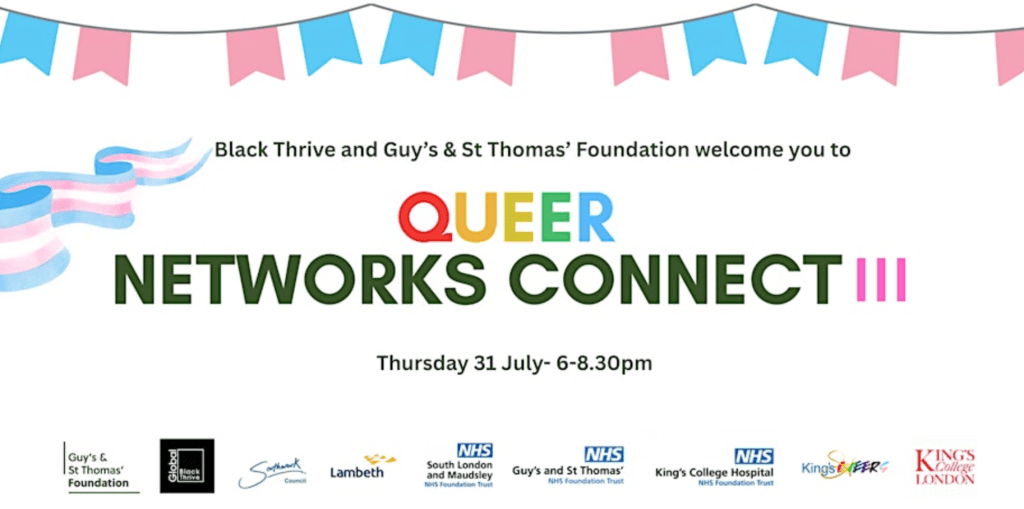
The event was held on the premises of the charity Guy’s & St Thomas’ Foundation, not to be confused with Guy’s & St Thomas’ NHS Foundation Trust (GSTT). Though, as you can see from the infographic advertising the event, there was buy-in from GSTT NHS staff and other NHS Trusts. Guy’s & St Thomas’ Foundation is principally funded by its property portfolio, worth over £400 million.
The event was organised by Black Thrive, a community interest company, which works ‘with statutory and community partners to address the inequalities that Black people face throughout their lives which negatively impact their mental health and wellbeing, experiences, and outcomes.’ Quite why it is helping a mostly white cohort talk about queerness and promote body modification via hormones/cosmetic surgery, is anyone’s guess. According to its most recent accounts, it has a whopping 27 employees with a before-tax profit of £281,000. Who is funding Black Thrive, you might ask? Well, it turns out Impact on Urban Funding is, to the tune of £3M over a five year period. And who is funding them? Well, then we come full circle to Guy’s & St Thomas’ Foundation, don’t we? One hand washes the other, as we like to say.
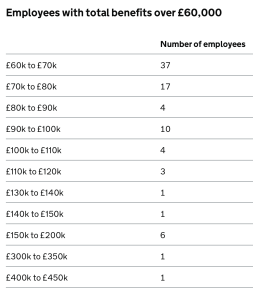
Guy’s & St Thomas’s Foundation Employee Expenditure – Source
The purpose of the event was to join together the various LGBT groups across the Lambeth and Southwark areas with a particular focus on NHS Trusts, of course. The chief executive of the Foundation, Laurie Lee, was keen to emphasise ‘health inequalities’ and ‘diversity and inclusion’ in the little speech he gave. The chap from Black Thrive mentioned involvement with Black Pride, but, given most of the people in the room were white (boo), he didn’t really have much to say with regards to Black Thrive’s core mission. Wellbeing practitioners were there to help us relax, including a hand masseuse, a shoulder masseuse, a board games team and a crafting table (making badges, etc) to help us unwind after the presentation was over. There was also hot food, wine, beer and soft drinks. A really nice night, in other words, for the most oppressed. Anyone who had an underspend in their budget should get in touch, urged the Black Thrive chap, and why wouldn’t you?
Trans healthcare presentation
Mx River Ujhadbor is a predoctoral research fellow from King’s College. River (they/them) wanted to talk about recommendations for trans inclusive healthcare, most of which can be found on this King’s Health Partners webpage and includes a link to the published ‘research’ document.
King’s Health Partners is an organisation linked to three NHS Foundation Trusts (Guy’s and St Thomas’, King’s College Hospital, and South London and Maudsley) with three core principles; delivering personalised health, accelerating digital health and improving population health. It is a designated Academic Health Science Centre, so receives its funding from NHS England and the National Institute for Health Research (NIHR).
River told us the story behind the project, i.e. that in 2022 she led an NIHR Fellowship project in collaboration with six young trans people and a ‘trans led youth organisation’ called Gendered Intelligence, who, surprise suprise, provided her with the research fodder. The project was needed because at the time it was found that trans young people were waiting a couple of years to be seen by specialist services and it was known from research already that this really affected their mental health and wellbeing. A deep dive into this research revealed something else too; there was a bias because it had excluded the voices of young people and their roles as ‘knowledge makers’. Thus, River’s project had sought to correct that.
River told us that questions were being asked if puberty blockers were safe but she wanted to know why there wasn’t enough evidence to clarify this and why pre-existing evidence got dismissed. Also, why was trans healthcare so underfunded? And why couldn’t trans people get money to do their own research for their health? (Which made it sound as if she was talking about a personal budget.) Why ask about the risks of gender affirming care, when you could ask about the risks of not receiving it? posited River. Trans people were the perfect people to make these risk assessments for themselves, and others, and transphobia should be regarded as a major risk itself.
The young ‘knowledge makers’, from Gendered Intelligence, imparted their wisdom via several creative methods: artwork, filmmaking, board game design and research workshops. The results, which funnily enough supports other research in favour of ‘affirmative’ treatments, also discovered trans young people had to go through so many obstacles, all of which negatively impacted their health. Obstacles included gatekeeping, lack of transparency and it being too much like a ‘snakes and ladder game’ (I guess that’s where the board game design session helped). Trans young people, in order to gain access to healthcare, had to engage in a range of tactics, for example, they had to adapt to the healthcare provider’s narrative and had to demonstrate distress on demand. There was also ‘exhausting self-advocacy’ which had multiple negative ramifications on their wellbeing. Hence, the guidance produced, elevated their voices. The list of recommendations were:
- Be proactive in allyship
Importance of pronouns and developing trust with patients. Make services trans inclusive. - Know the guidelines and laws applicable to your work
River said this should include knowing how many days off someone could have for ‘top surgery’ or how many days off a person might need to support someone having top surgery. Don’t assume you know the guidelines, read them. - Ask only what is necessary about a person’s identity
You don’t need to know how someone identifies, River told us. For example, if you needed to take an androgen test from a patient? Yes maybe, she conceded. It was also really important to ask direct questions. For example, if a patient could get pregnant, you should ask: Do you have sex which can cause pregnancy? - Be proactive in discussing terminology
This was about being mindful in how people might talk about their bodies. The gist was that if people found anatomical terms too triggering you could point at a diagram instead or write down words on a piece of paper. (Why not charades, in that case?) If you make a mistake, apologise and move on. - Avoid debates on the validity of trans
Any critical questions should be avoided because they were transphobic and hateful and maintained the status quo of cis-het supremacy and domination. As an ally you could help by not starting debates and if one was happening, help shut it down. Take any affected trans persons aside and support them. Help take the burden from trans people in having difficult dialogue. - Initiate institutional change
Do the work! - Meaningful trans involvement in research, service design, implementation and service delivery
Trans people had been excluded from research about themselves! Denied leadership positions, etc. People are the expert on their own lives. Support people to progress to leadership positions. Co-produce research with trans people.
So, in summary, park your critical faculties once the word I’m trans is uttered.
Trans activist non-binary mid-wife
There was knowing laughter when Alice-Amanda Hinton was introduced as a ‘formidable advocate’. I like to think it’s because people were reflexively acknowledging that she’s a nutter, since she clearly is. Hinton is a midwife at King’s College Hospital but also has time to volunteer for CliniQ, its transgender health centre.
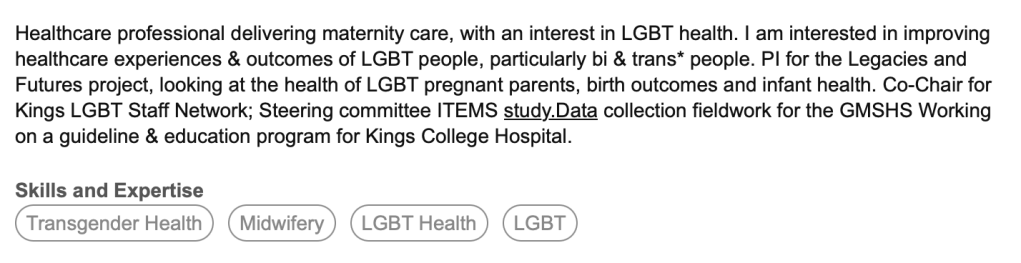
The blurb for one of her books on LGBTQ+ reproduction, reveals that she/they is a bisexual/queer, non-binary midwife with 13 years of experience. Judging her age, I think this means that she came to midwifery as a second career.

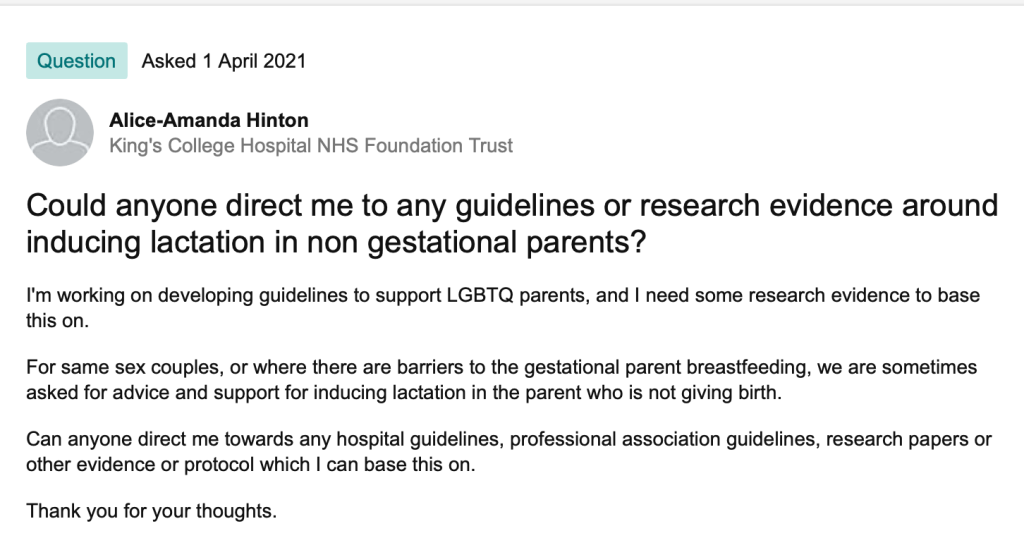
During the pandemic, Hinton, for the lack of anything better to do, did lots of research into LGBT healthcare and was particularly horrified by the situation for trans and non-binary people. The discrimination was just so blindingly obvious! Hinton set about putting something in place at King’s College Hospital using its LGBT staff network, which she co-chairs. ‘Higher ups’ weren’t that keen but then suddenly were and showed something to Hinton they thought workable, but Hinton told them ‘actually it was not fine’ and that they had to wait for her to create something ‘good’. Hinton went away and furiously wrote, talking to a lot of people, including friends, which included friends who had lived experienced of trans healthcare. She also reviewed other trans inclusion NHS Trust guidance. She believes the one she wrote is the ‘best one out there’. It was a Trust wide guideline, said Hinton, which ended up being two separate things; one for staff, on how staff should treat patients and how patients should be treated, and the other … well, we didn’t learn, though it made it sound like the staff policy was secret (certainly no web searches bought the document up). Hinton was glad it was in place because it would need to be ‘deliberately dismantled if it were to be ignored.’ The policy covered the whole gamut of healthcare, including emergency admissions through A&E, pregnancy (e.g. ‘the challenges of providing blood to someone with childbearing potential’). The latter led to her being invited to a blood transfusions conference, where there was a ‘very complicated but open discussion about it’ (aka as people politely biting their tongues whilst sarcastically explaining it was a stupid idea).
The previous weekend Hinton had been at Trans Pride with a hundred thousand other people, and although the fear was there (ILGA had ranked UK quite low in safe places to live if you were LGBTI, scoring 45.65%) the community still had each other. Hinton wanted to encourage us all to think of the skills we had and how we could contribute to the fight, drawing on the metaphor of a role playing game, you needed your wizards but also your fighters, tacticians, etc.
Who else was in the room?
Other activists in the room gave a shout out after the presentations were over.
LGBTQI unpaid carers
One woman was doing research into unpaid carers, who identified as LGBTQI, caring for those with a severe mental illness. The project had just opened for recruitment now she had her ethics approval. (You might think this a very niche project, not yet undertaken, but a quick google proves otherwise, with Camden Council launching a new service for the same, and the University of Sheffield also having a project in the offing.) Did we know of anyone or anyone with contacts who could help?
LGBTQI+ health needs assessment
The Southwark Council Public Health team now has a LGBTQI+ health needs assessment report, which will be discussed at a public meeting on 24 September. The Southwark Council employee also wanted to promote its Baby Buddy app, the webpage about which, as per the norm for these things, makes no mention of mothers, women or females, though does at least use the term breastfeeding over chestfeeding. Recently the app had been updated with advice specifically for LGBTQI families, so probably that is rectified there.
Trans+ Health Research UK
A trans-identified male, from a newly formed community interest company, introduced himself. Trans+ Health Research UK was set up only two months before (c. May 2025). At the current time of writing, it has no active projects, but plans to do one on ‘Self Medication’. Lilly-Emma Thynne invited people to come and speak to him and said that he would be working with NHS England via a project run by Lancaster University.


Peer support groups for LGBTQ+ people affected by mental health
A woman from Mind said they had two peer support groups specifically for LGBTQ+ people, one in Southwark, the other in Lambeth. That evening she was proud to announce the launch of a trans and non-binary support group in Lambeth, which would start in September 2025.
The Bridge, Southwark
Flora Cohen, nurse at CliniQ and also The Bridge in Southwark, stood up to speak. The clinic runs once a month and provides bridging prescriptions for cross sex hormones but also routine primary care for trans-identified residents living in south Southwark and Lambeth. The Bridge can get you gender affirming care within a few months (she stopped herself halfway through ‘a couple’) rather than ‘waiting a thousand years.’
Cohen is also clinical nurse specialist at the UK Cancer and Transition Service, which is based in Islington but is a national service. If you ever come across a trans patient diagnosed with cancer, or who has had cancer in the past, you could signpost them to this service.
Black Thrive’s children and young people’s team
In conjunction with the Southbank Centre, this team will be running the new arts and wellbeing programme for young people, running activities, like badge making workshops, etc. It would also look at how to be creative about health and addressing the ‘waiting list needs for young people’. Hm. I looked for confirmation of this on the Southbank Centre website but it appears the partnership is yet to be formally announced.
Conclusion
So, yet again, we find lots of money swilling around in the third sector and trans activism in the NHS being amply supported by us, the tax payer. Not an original point to make but it is worth saying again and again: Why do public bodies host these activists/activist spaces? It’s not like these people can’t congregate online or in dedicated LGBTQ spaces outside of work, if they want to petition for medical malpractice. Unfortunately the answer is, all too often, senior managers have a social justice complex, even though they earn the big bucks and would never actually want communism. You would never see this kind of support for any centre or right of centre political activism, that’s for sure.
Thank you for reading! Sign up to my blog by going to the bottom of the page.
Please share on other forums if you liked it, as I only do Twitter.
 The Lies They Tell
The crap they push is so damn tedious. Damn cheek of ‘why isn’t there enough evidence about the safety of puberty blockers’. Well maybe Polly Carmichael could pop along and give them some pointers 🙄
LikeLiked by 1 person