
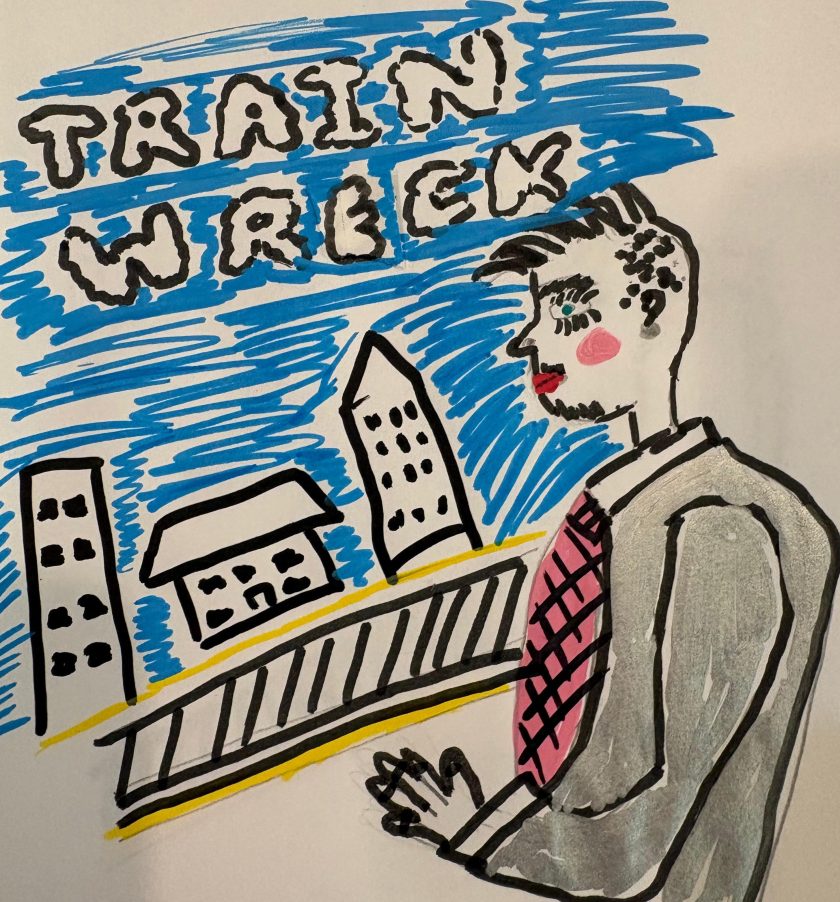
The lamest element is the bungled depiction of Chase Strangio under ‘heightened scrutiny’.
Panel discussion
Following the screening of the film there was a panel discussion with the director, which I blogged about separately.
Review of documentary
Beginning with court scenes augmented by portentous music, Heightened Scrutiny follows the story of pipsqueak lawyer, Chase Strangio, a trans-identified female working for the American Civil Liberties Union (ACLU), as she attempts to persuade the courts – and us – that GnRH agonists (aka puberty blockers) are life saving healthcare for pre- and -pubescent children. Too many irrelevant talking heads opine, who are either media persons or activists, on side with the argument that blocking puberty is a human right and that bodily autonomy is above everything. Of course, the threat of violence and suicide are ever present in the narrative – ‘trans bodies are under attack’ no less, hence the theme of the documentary – heightened scrutiny.
The argument Strangio/ACLU pursues against the government is this – as it is explained in the documentary, i.e. unclearly and without substantive examples -: It is discriminatory for a ‘transgender boy, [who] cannot receive testosterone because he was assigned female at birth. Had he been assigned male at birth, he could receive that same medication for that same purpose.’ Strangio argues this is sex discrimination. (By the way, the case ultimately failed.)
Strangio makes a comparison between herself addressing the Supreme Court as a trans person, and that of Ruth Bader Ginsburg being the first female lawyer to do so. RBG was apparently told that, as a woman, she might be too emotional to make the right impact. Would a trans person also be seen as lacking credibility? squeaks Strangio. Giving me the perfect excuse to post this:
People concerned about children taking puberty blockers, and thereby becoming infertile before even having experienced sex, are compared to those resistant to interracial marriage and mixed race children, i.e. it was once thought mixed race children would find it difficult to thrive in a society obsessed with race. This uses up precious time rehearsing arguments that surely only the over-70s will have ever heard, whilst avoiding the salient: What happens medically to children put on GnRH agonists during a crucial period of brain and sexual reproductive development? No doctor ever appears.
Journalist Jelani Cobb says he hates bullies and then gets teary about it. Again, it has no relevance to the legal arguments Strangio is limbering up to make and the gentle giant doesn’t explain how people who disagree with children being put on off-label chemotherapy drugs, is ‘bullying’. Cue ‘trans’ child, Mila, being rolled out for the cameras.
Mila is a 12 year old boy with transhausen mom (who I learnt during the panel discussion was known already to Strangio). Mila gives an impassioned speech to his school board and, when we see him give the exact same speech twice more, we realise it is a well practised and written piece of propaganda by an adult. We also see Mila at home, with Strangio at dinner, pallying up with the mom and Mila himself. ‘They say kids can’t understand the consequences of this medical care, but do you understand the consequences of not getting this medical care?’ says Strangio to the 12 year old. ‘Depression, anxiety, no self esteem?’ answers eager-to-please Mila.
Mila’s mom declares that she is unable to engage with ‘transphobic’ people because they don’t have rational arguments. The mom has rational arguments though, which we don’t hear (obviously) and the scene quickly shifts to the court room with Strangio being asked to explain the alleged 1 percent regret rate versus an 85 percent regret rate found in another study. Strangio gives a breathless unsure answer which makes no sense. Heightened scrutiny, indeed. One might say though, that the documentary is well put together, in the sense that it pings seamlessly from one trans activist talking point to another, ending on the inevitable theme of ‘trans joy’.
‘Coverage is creating the law,’ is another argument the film pursues, failing to acknowledge the vast amounts of trans activist propaganda pumped out over the last 15 years, often by human rights organisation, like the ACLU, which have helped along the decimation of single sex spaces, normalised the use of puberty blockers, etc.
Alberto Cairo, a father of a ‘trans child’ (a trans-identified female), trots out the puberty-blockers-have-been-used-for-decades argument. He tells us that a parent’s duty is to never question their child but to say ‘I love you’. Again, there is another teary moment, as the transhausen dad is overcome with emotion.
On dealing with the issue of regret, no detransitioners appear, yet several minutes are spent trashing an opinion piece in the New York Times called ‘As Kids, They Thought They Were Trans. They No Longer Do‘ (published on 2 February 2024), in particular that it had not been ‘fact checked’. Instead, we just have the assembled talking heads claim it is less than one percent who regret transition and that people do so because of external pressure to conform. People regret all sorts of things! Including having children … On the other hand, children ‘forced’ to go through puberty end up with deep voices and facial hair they don’t want. Which is so much worse than being sterilised, isn’t it?
The only revealing insight into Strangio is when she shares her philosophy on what the law means to her, revealing a victimhood fantasy but also that her focus was not on winning:
My objective [at the Supreme Court] was always to do as much as I could to talk about the case. I like the law as an intellectual exercise and I want people to understand the role it plays in their life and to have the facility to criticise it from a place of being informed. The law is a system of violence and the role of the lawyer, in my view, is to minimise that violence through advocacy and then other people and other tools are then designed to be more transformative.
Chase Strangio on the law
However, the lamest element of the film is undoubtedly the attempt to paint Strangio as a hero battling singlehandedly against cis-het-patriarchy, under ‘heightened scrutiny’ no less, whilst being an ordinary ‘dad’ to an unseen-child and a scene-stealing cat. Her ‘battles’ include fluffing lines for propaganda shorts, sitting on her sofa looking tired (aren’t we all?), tapping on her keyboard (gripping), getting a tattoo, going on holiday to Europe, hanging out with misery guts Elliot Page, and, most egregiously, mincing on the streets of Brooklyn, boasting about all the great bars and restaurants she lives near. Worse still, we never see her land a single punch in the court room.
Even her apparent tiredness and rumination on the task ahead feels forced and this is because she is not – and never was – battling alone, but on the payroll of the behemoth that is the ACLU. Mr Google says the ACLU has an annual income of $383 million, with staff salaries in the $100k range, so we are not talking about David and Goliath here, even if Strangio herself is bordering on midget.
More than a train wreck …
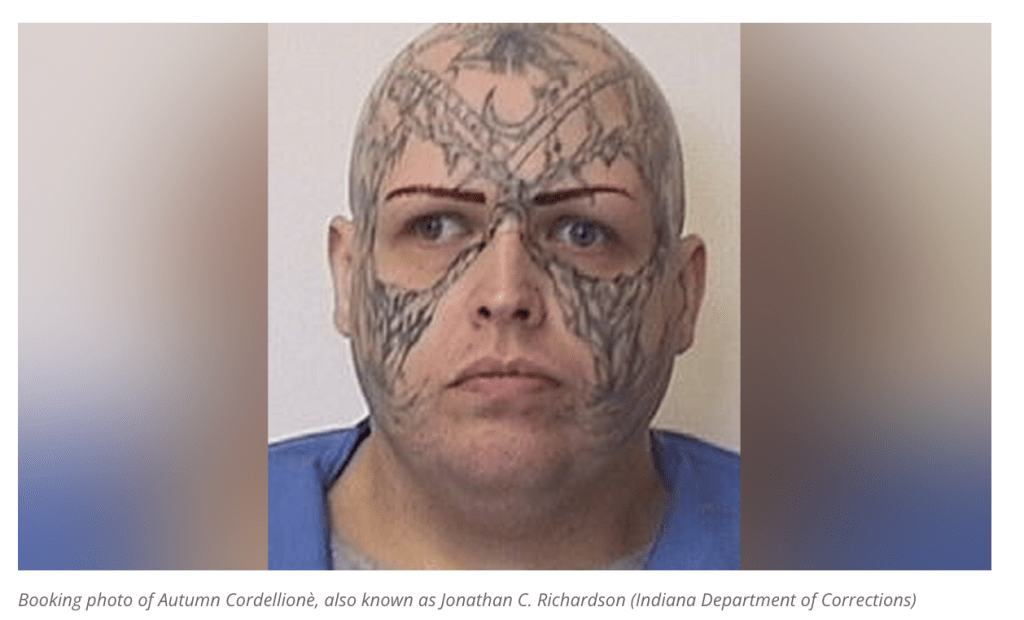
If championing puberty blockers weren’t bad enough, the ACLU also simps for sadistic killers. Yep, you read that right. A few days after I finished this blog, the story of Jonathan C. Richardson, a trans-identified male who murdered a 11 month old baby girl, popped up on my timeline. Richardson is one of the ACLU’s past causes, filing a lawsuit on his behalf because he was denied ‘gender affirming surgeries’. You can read about some other trans-identified criminals the ACLU has supported in this Reduxx article. If only there was heightened scrutiny.
Thank you for reading! Sign up to my blog by going to the bottom of the page.
Please share on other forums if you liked it, as I only do Twitter.


You must be logged in to post a comment.